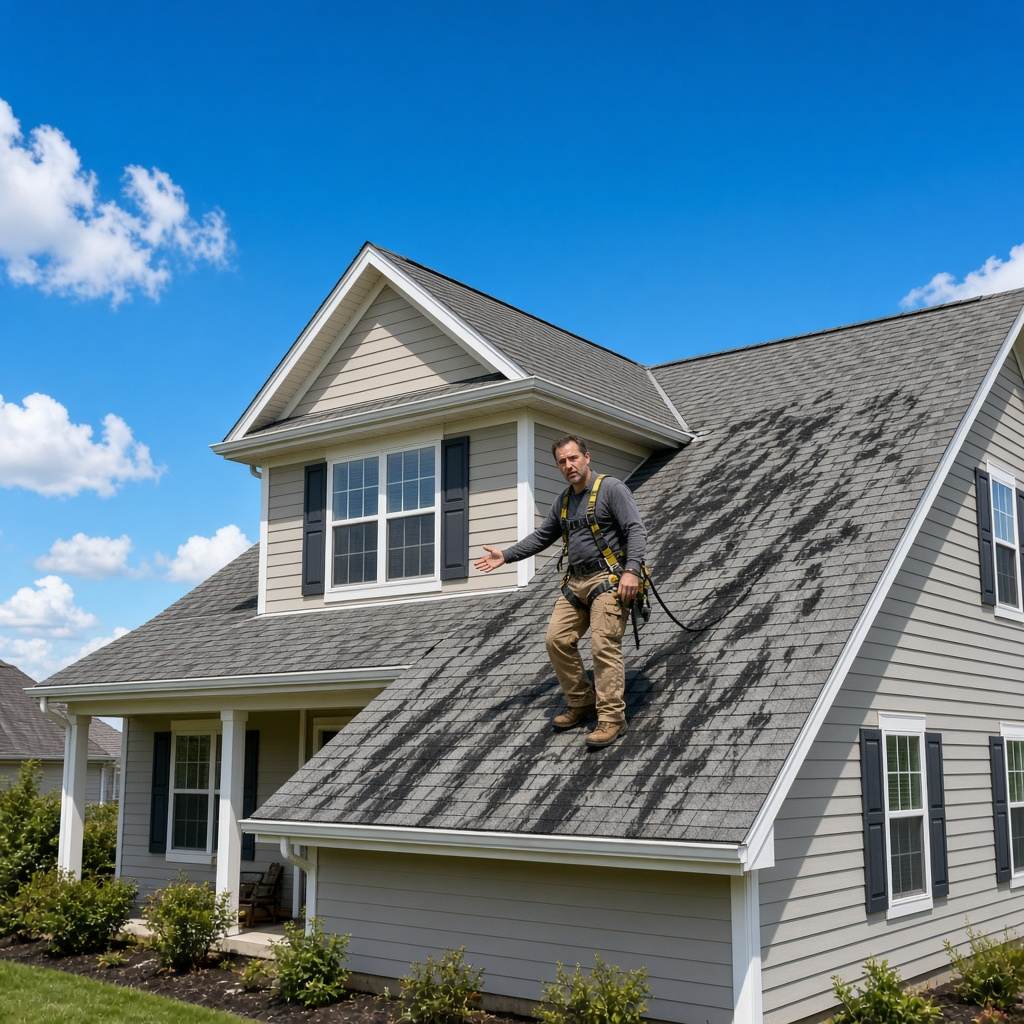
Those black streaks running down your roof are algae, not dirt or soot. The organism is gloeocapsa magma, and it spreads on asphalt shingles in humid climates like Northern Virginia’s. It can be removed, but only with the right method: a no-pressure soft wash. Pressure washing a roof to remove the streaks does more harm than the algae, stripping the shingles and shortening the roof’s life. Here is what causes the streaks and how they come off safely.
What the Black Streaks Actually Are
The black streaks are gloeocapsa magma, a blue-green algae that appears black as it spreads. It feeds on the limestone filler manufacturers add to asphalt shingles, which is why it keeps spreading year after year once it takes hold. The streaks typically start near the ridge and run downward, following the path water takes as it sheds off the roof. They show worst on north-facing slopes that stay damp and get the least sun.
Why Gainesville Roofs Get Them
Gainesville’s climate is ideal for the algae. The 1991–2020 normals at Washington Dulles show 43.24 inches of annual rain and a 55.7-degree mean temperature — the humidity and warmth the organism needs. Roofs on shaded lots and north-facing slopes stay damp longest and streak first, a common pattern across Gainesville’s tree-heavy communities.
The age of local roofs adds to it. Homes built in the 2000–2009 wave that dominates the Gainesville area are on original or first-replacement shingles, and the longer a roof sits, the more algae accumulates. Left alone, the streaks spread across the whole roof.
Why You Should Never Pressure Wash a Roof
Pressure washing is the wrong tool for a roof, and it causes permanent damage. Asphalt shingles are coated with fine granules that protect them from the sun. High-pressure water blasts those granules off, and they do not grow back. A roof stripped of granules ages faster, can leak sooner, and in most cases the damage voids the shingle manufacturer’s warranty. The black streaks may come off, but at the cost of years of roof life.
How Soft Washing Removes the Streaks Safely
Soft washing removes roof algae with no pressure at all. A cleaning solution is applied across the affected slopes to kill the gloeocapsa magma at the source. The solution does the work — the streaks begin clearing without scrubbing or force. A gentle rinse or natural rainfall carries off the dead algae. Because nothing on the roof is ever pressurized, the granules stay intact and the warranty stays valid. This is the method roofing manufacturers themselves call for.
To slow regrowth, zinc or copper strips can be installed along the ridge; the trace metals they release each time it rains discourage new algae. Combined with a soft wash, that keeps a roof clear for years.
If your Gainesville roof has black streaks, soft washing removes them without the damage pressure would cause. Call 123-456-7890 to reach a roof cleaning provider, or read more about roof cleaning in Gainesville.